Why Sending full band instruments through the PA?
The Shift Toward Complete PA Integration
If you’ve walked into live venues over the past decade, you’ve likely noticed a transformation: guitar cabinets pushed to floor level alongside drum risers are gradually being replaced, or supplemented, by speakers directing everything toward the audience. The debate around whether all instruments should feed through the main PA (Public Address System) rather than relying on individual amplifiers and stage monitors has become central to modern live sound philosophy. Here’s why the industry is moving decisively toward full PA integration for every instrument in a full band setup.
The Problem with Traditional Stage Volume
Traditional live setups position each instrument’s amplifier at its source: guitars through tube stacks, basses through dedicated cabinets, keyboards through local speakers, drums entirely acoustically amplified. While this approach serves the musicians’ ability to hear themselves, it creates fundamental problems for everyone else, the audience and the sound engineer.
Uncontrolled bleed becomes inevitable. When seven to ten sound sources radiate independently across a stage, microphones inevitably capture unintended frequencies. Drum mics pick up guitar cymbal spill. Vocal mics catch keyboard leakage. Bass mics blend with kick drum attack. The result? A muddy sonic environment where clarity suffers because the engineer cannot isolate elements during mixing.
Audience experience fractures depending on seating location. Sit near a Marshall stack and guitars dominate your listening field. Step toward another corner, and suddenly the vocals drown out the snare. Consistency collapses when unamplified acoustic sources and loud independent speaker systems compete without centralized control.
What Full PA Integration Enables
When every element routes through a unified public address system, even via direct injection (DI), the landscape transforms completely.
1. Engineer Controlled Balance
With all signals feeding the FOH (Front Of House) console, the sound engineer gains complete authority over frequency balance, dynamics, and spatial placement. Guitars can carve their own midrange pocket without overwhelming vocals. Keyboards occupy their designated high-mid spectrum without competing against brass section bleed. Drums achieve punchy low-end definition without bleeding cymbals across every channel.
This isn’t theoretical, it represents decades of learning from professional touring operations. Bands like Radiohead, Tool, and countless session-based acts have transitioned toward in-ear monitoring combined with total DI routing precisely because it delivers predictable results night after night.
2. Reduced Feedback Risk
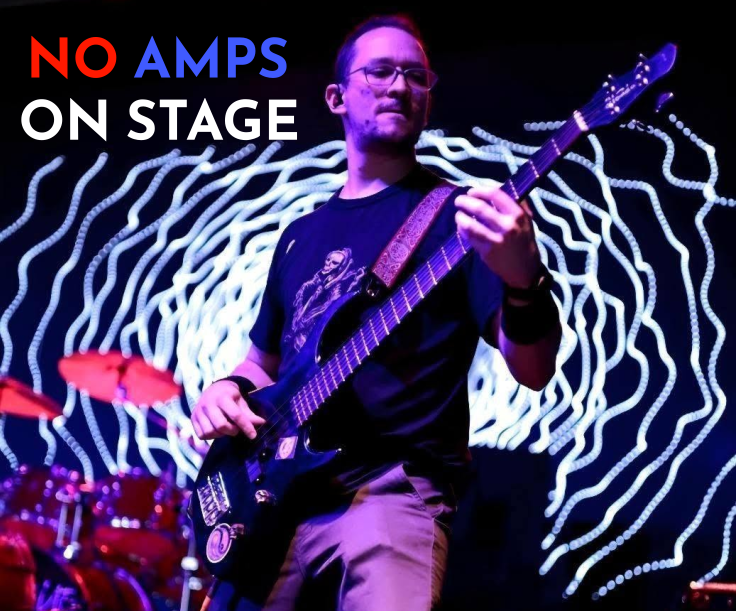
Stage volume reduction through amplifier elimination shrinks the feedback envelope dramatically. Less competing noise means vocalists can sing louder without mic proximity becoming dangerous territory. Open-air festival stages benefit particularly, fewer reflections bouncing off walls mean fewer opportunities for oscillation loops.
Even indoor clubs gain immediate improvements. Lower overall SPL (sound pressure level) on stage prevents monitor wedges from fighting guitar cabinets, allowing cleaner mixes at lower volumes, a luxury many small venues desperately need.
3. Consistent Audience Experience
Front row and balcony seats now receive identical tonal signatures because one engineered mix reaches everyone uniformly. No more “guitar-heavy left side” or “vocal-isolated right wing.” Venue capacity limitations fade away as consistent coverage extends further without sacrificing quality.
Tour promoters increasingly mandate FOH-only reinforcement for exactly this reason: ticket buyers expect fairness regardless of purchase price tier or seat assignment lottery outcome.
4. Flexible Scaling Without Reconfiguration
Small club gig tomorrow? Maximum stadium headliner next week? With all sources already routed digitally through the same signal chain, scaling simply involves adjusting output levels, not rewiring entire rig architectures between engagements. Preamp/DI interfaces handle impedance matching; modelers replicate amp characters without physical cabinet resonance variables complicating things further.
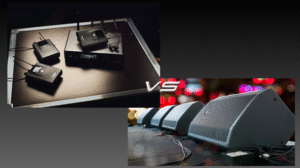
Digital modeling units (Line 6 Helix, Fractal Audio Axe-Fx, Kemper Profiler) make tone replication nearly indistinguishable from analog counterparts while eliminating bulky tube heads hauling responsibility alone. Musicians adapt quickly once hearing themselves clearly through personal monitor feeds versus battling ambient wash.
Common Pushback and Reality Checks
Critics raise valid concerns worth addressing fairly before dismissing outright.
“But guitar tone loses character without air pushing real speakers!”
Modern technology captures impulse responses mimicking exact mic placements behind legendary cabinets. Upload those templates onto digital processors, add slight natural reverb simulation if desired and you get 95%+ authenticity with zero logistics nightmares plus maximum flexibility tweaking EQ curves mid-set remotely via iPad apps connected wirelessly.
“Drummers need acoustic power, they’re rhythm anchors!”
Hybrid solutions exist triggering sample augmentation electronically triggered underneath genuine snares/cymbals, blending organic stick hits alongside synthesized sub-kick reinforcements pumped exclusively through subs managed centrally at FOH. Acoustic shells remain mounted but stay silent except when drummer chooses otherwise selectively per song arrangement demands dynamically.
These aren’t perfect overnight revolutions forcing artists abandon decades-old traditions blindly, but evolution progressing methodically proven track record delivering superior outcomes repeatedly demonstrates merit worthiness continuing forward momentum confidently embracing change responsibly.